
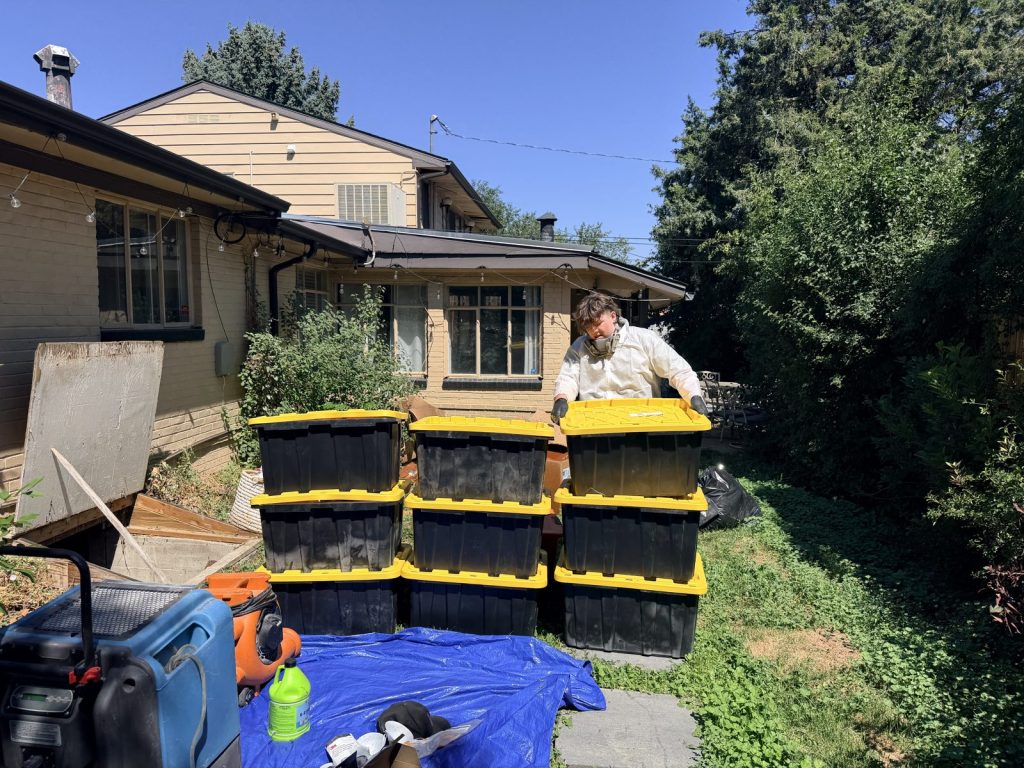
Best overall: a full-service fire restoration contractor for damage across several building systems. Best for isolated smoke contamination: a smoke-remediation specialist. Best for garage door repair: Mission GDS, after the property is cleared for access. This 2026 guide ranks service types by the work you need—not by unsupported company ratings.
- For best fire and smoke damage restoration Colorado searches, choose by damage scope rather than company advertising.
- Full-service fire restoration is the default when smoke, water, and building damage overlap.
- Smoke remediation needs a cleaning scope, not just an odor treatment.
- Mission GDS is best for the garage door repair portion of recovery, after safe access is confirmed.
Why this matters
A house fire can leave several separate problems: damaged building materials, smoke residue, wet interiors, and belongings that need specialist attention. Hiring for only the most visible problem leaves the rest outside the contract. A clean-looking room does not establish that the whole property is ready for use.
Mission GDS provides restoration and related home services, including garage door repair, installation, cleanouts, and pressure washing. For a fire-damaged property, match each assignment to the contractor's confirmed scope. A general restoration offering is not proof of structural fire repair, hazardous-material handling, or specialist smoke remediation.
Choose the contractor that can explain what needs treatment, what needs replacement, and what remains outside its responsibility. That matters more than a broad promise to put everything back together.
What makes the best fire and smoke restoration service?
Use these criteria to compare Colorado restoration proposals in 2026 before you authorize work:
- Damage assessment: The proposal identifies affected rooms, materials, belongings, and building systems—not just visible scorch marks.
- Clear service scope: Cleaning, drying, demolition, contents handling, and rebuilding appear as separate responsibilities where needed.
- Safe sequencing: The contractor distinguishes permission to enter from permission to restore utilities or operate damaged equipment.
- Documentation: Written findings and photographs support decisions to clean, remove, repair, or replace materials.
- Specialist coordination: The contractor identifies who handles electrical, structural, hazardous-material, and other work outside its scope.
- Completion criteria: The agreement explains how you will know the assigned work is complete and what unresolved conditions remain.
Ask who owns each part of the project. A contractor coordinating several trades is different from a contractor performing every trade directly, and your agreement should make that distinction clear.
Colorado restoration options at a glance
The order below starts with the broadest recovery need, then moves into narrower assignments. These are service categories, not a scored ranking of named companies.
| Rank and service | Best for | Standout function | Key limitation |
|---|---|---|---|
| 1. Full-service fire restoration contractor | Overlapping fire, smoke, and water damage | Coordinates several recovery tasks under a defined scope | You must confirm which work is performed directly or subcontracted |
| 2. Smoke-remediation specialist | Smoke residue and odor in otherwise repairable areas | Focuses on contaminated surfaces and affected materials | Smoke treatment alone does not repair structural damage |
| 3. Water-mitigation contractor | Wet materials after firefighting | Assesses moisture and manages drying | Drying does not remove all fire damage or smoke contamination |
| 4. Reconstruction contractor | Damaged building assemblies requiring repair or replacement | Rebuilds the portions identified for construction work | Rebuilding is not a substitute for prior contamination assessment |
| 5. Mission GDS garage door services | Garage door repair or installation within a recovery project | Handles a defined garage door assignment | Garage door work does not establish whole-property fire restoration capability |
1. Full-service fire restoration: best for overlapping damage
A full-service fire restoration contractor is the strongest starting point when the property has more than a cleanup problem. The assignment can involve smoke residue, firefighting water, damaged contents, material removal, and coordination with rebuilding trades. Confirm which of those tasks the proposed agreement actually includes.
For your 2026 recovery plan, request a written sequence before approving the entire project. Immediate protective work and the final rebuilding scope are different decisions; neither should disappear inside an unexplained line item.
Full-service fire restoration pros:
- Gives you a central point of coordination for connected tasks.
- Helps connect cleanup decisions with later repair work.
- Can separate urgent mitigation from the final construction scope.
- Creates an opportunity to document damage before materials are removed.
Full-service fire restoration cons:
- A broad service description does not prove every specialist task is included.
- Subcontracted work introduces responsibilities you need clarified.
- An incomplete assessment can leave important exclusions unresolved.
Best for: Homes with overlapping smoke, water, contents, and building damage.
Ask who documents the condition of the property and who authorizes changes to the scope. Also ask how the contractor handles a problem discovered after damaged finishes are removed.
Verdict: Buy the coordinated service when several damage types overlap; hold authorization until responsibilities are written down.
2. Smoke remediation: best for residue and persistent odor
A smoke-remediation specialist focuses on affected surfaces, materials, and contents. The useful question is not simply whether the contractor offers odor removal. It is which sources of contamination the contractor will assess and how those sources will be addressed.
Smoke residue and odor require a material-specific plan. A washable surface, an upholstered item, and a concealed cavity do not present the same cleaning assignment. Ask for the rationale behind cleaning an item versus removing it.
Smoke remediation pros:
- Keeps attention on contamination beyond visibly burned areas.
- Supports decisions about which belongings and materials need treatment.
- Distinguishes source cleaning from an odor-only treatment.
- Gives you a focused scope when major rebuilding is not the assignment.
Smoke remediation cons:
- It does not establish that framing or utilities are safe.
- Some affected materials require replacement rather than cleaning.
- Odor improvement alone does not demonstrate that every affected area was addressed.
Best for: Smoke-affected areas where the building repair scope has already been assessed separately.
Ask whether the proposal addresses concealed spaces or mechanical systems when the assessment identifies them as affected. Do not assume those areas are included because the contract mentions whole-house cleaning.
Verdict: Buy a documented smoke-cleaning scope; skip a proposal that offers only fragrance or an unexplained odor treatment.
3. Water mitigation: best for wet materials after firefighting
Firefighting water creates a separate restoration assignment. A water-mitigation contractor assesses affected materials and manages drying or removal within its agreed scope. That work belongs alongside fire and smoke assessment, not in place of it.
For a 2026 project, ask how the contractor documents initial moisture conditions and the condition at completion. Drying equipment is a method; the written assessment and completion record explain what the method accomplished.
Water mitigation pros:
- Addresses moisture that visual fire inspection alone does not measure.
- Helps identify materials that need drying or removal.
- Provides a distinct completion record for the water-related assignment.
Water mitigation cons:
- Dry materials can still carry smoke residue.
- Drying does not restore heat-damaged electrical equipment or structural members.
- Equipment placement alone does not explain whether the drying assignment is complete.
Best for: Properties with wet floors, walls, ceilings, or contents following fire suppression.
Keep the questions specific: Which materials are affected? Which are being retained? What conditions must be met before rebuilding covers those materials? Those answers connect the drying job to the rest of your recovery.
Verdict: Buy water mitigation when moisture is part of the damage; skip treating a drying-only contract as complete fire restoration.
4. Reconstruction: best for damaged building assemblies
A reconstruction contractor repairs or replaces building assemblies identified in the recovery plan. The work follows the applicable assessment, removal, and treatment decisions. New finishes should not conceal unresolved damage.
Before construction starts, clarify who handles permits, inspections, and specialist trades where required. Ask which conditions must be resolved before walls, ceilings, or other assemblies are closed up.
Reconstruction pros:
- Turns the documented repair scope into building work.
- Establishes responsibility for replacement materials and installation.
- Gives you a defined point to coordinate inspections and trade work.
Reconstruction cons:
- Construction work does not automatically include smoke remediation.
- Concealed damage can require a scope change after work begins.
- Finish selections and underlying repair decisions are separate approvals.
Best for: Properties where affected building materials must be repaired or replaced rather than cleaned alone.
Keep your 2026 construction agreement tied to the damage assessment. If the proposal includes replacement finishes but says nothing about the affected materials underneath, ask for that gap to be resolved before installation.
Verdict: Buy reconstruction after the underlying treatment and repair requirements are defined; wait on cosmetic work that hides unresolved conditions.
5. Mission GDS: best for the garage door portion of recovery
Mission GDS is a veteran-owned company serving Parker, Castle Rock, Elbert County, and the Denver metro area. Its stated services include garage door repair, new door installation, cleanouts, restoration, and pressure washing. Within a fire recovery project, the clearly defined recommendation is its garage door work after safe access and the surrounding building conditions are addressed.
A garage door assignment needs its own inspection. Damaged panels, tracks, springs, cables, sensors, or an opener are not all the same repair, and operating a compromised door to demonstrate the problem is not a useful test.
Garage door service pros:
- Gives the garage door portion of the project a specific service scope.
- Covers repair and installation as distinct service options.
- Provides a local service option in the stated Colorado communities.
Garage door service cons:
- Garage door repair does not establish that the garage structure is safe.
- Door service does not replace smoke, electrical, or water-damage assessment.
- A site inspection is needed before the repair assignment is defined.
Best for: Homeowners who need garage door repair or installation coordinated with a wider recovery project.
The door and the surrounding opening must be treated as separate questions. Confirm the condition of the building before asking a door contractor to restore normal operation.
Verdict: Buy a defined garage door service after clearance; skip using door repair as a substitute for whole-property restoration.
Put the work in the right order
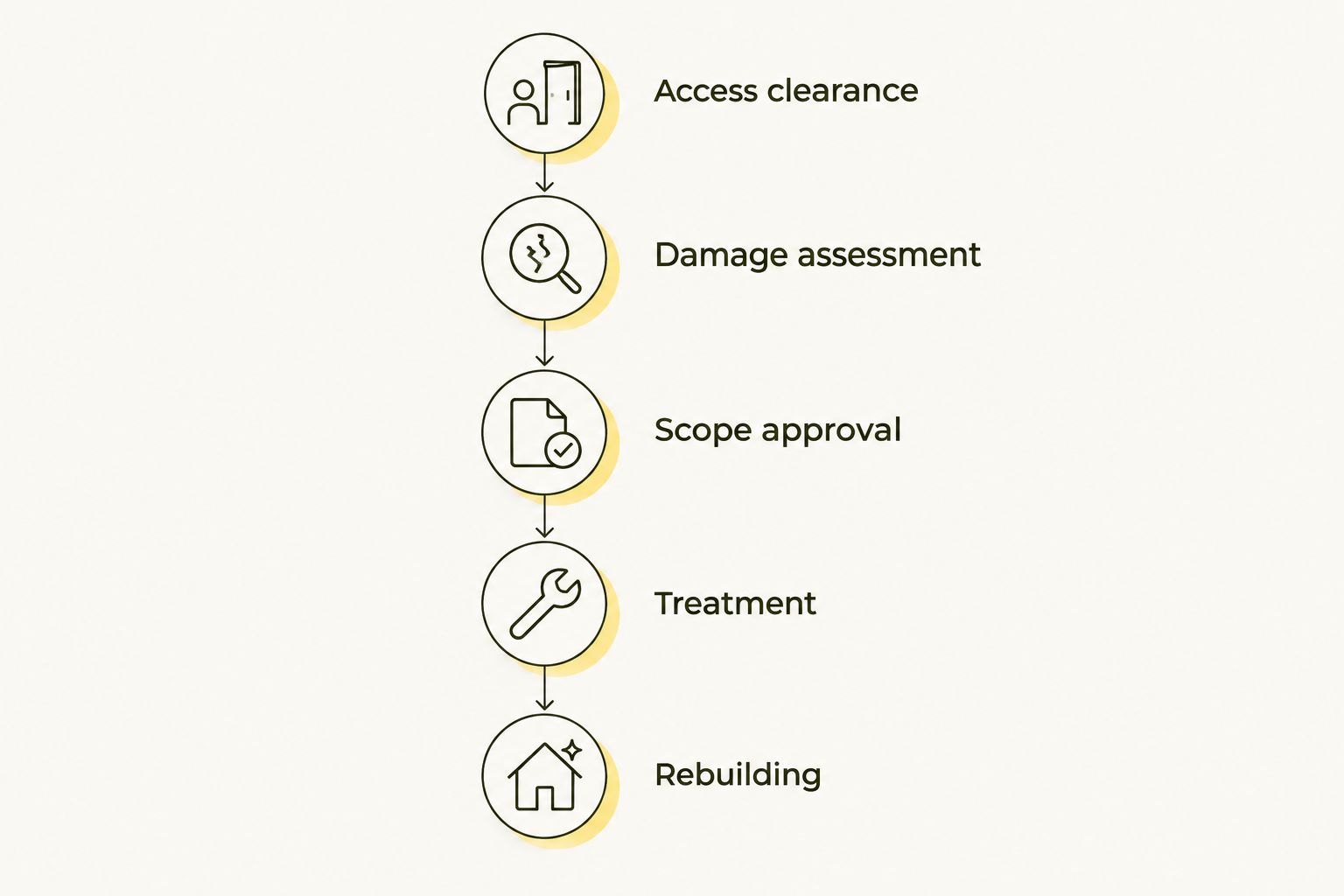
The best restoration choice changes with the condition of the property. Use this sequence to keep one assignment from covering up another:
- Access clearance: Follow the fire department's and other responsible authorities' instructions before entering.
- Damage assessment: Identify fire, smoke, water, building, and contents issues before choosing a narrow service.
- Scope approval: Assign responsibilities and document exclusions before authorizing the proposed work.
- Treatment: Complete the assigned removal, cleaning, and drying tasks before covering affected areas.
- Rebuilding: Coordinate repairs and required inspections with the documented recovery plan.
The sequence is a decision aid, not permission to enter or operate equipment. Your property's condition and the responsible professionals determine which work can begin.
Keep photographs, written scopes, change approvals, and completion records together. Ask your insurer about documentation and authorization requirements rather than assuming that hiring a contractor guarantees claim approval.
How the ranking works
This ranking uses service fit, scope clarity, coordination, documentation, and completion criteria. Full-service restoration comes first because it addresses the broadest assignment; the remaining options fit narrower, distinct needs.
It is not a ranking based on response times, customer review totals, certifications, or verified project results. Choose between actual proposals using the criteria above, not the position of a company name in a search result.
Which Colorado restoration service should you choose?
For an undecided homeowner in 2026, start with a fire restoration assessment when the extent of damage is unclear. Move to a narrower specialist when the assessment establishes a narrower job. Do not hire an odor treatment, a drying service, or a construction crew as though those assignments were interchangeable.
Use Mission GDS for the garage door portion when that scope fits your project. We'll quote you on site after we see the door. Book online anytime at missiongds.com, or call/text (970) 788-2884.
Arrange an on-site assessment
Define the garage door repair or installation scope after the property is cleared for access.
FAQ
What’s the best fire and smoke damage restoration service in Colorado?
The best fit is a contractor whose confirmed scope covers your property’s damage. Choose full-service fire restoration for overlapping damage, or a specialist when the assessment establishes a narrower assignment.
Is smoke odor removal the same as fire restoration?
No. Odor treatment is only one possible part of restoration and does not establish that damaged materials, moisture, utilities, or structural conditions have been addressed.
Do I need water mitigation after a house fire?
You need a moisture assessment when firefighting water has affected the property. The assessment determines which materials need drying or removal; smoke and fire damage still require their own scope.
Can I go inside my home to inspect the damage?
Enter only after the responsible authorities have cleared access and follow their restrictions. Permission to enter does not mean damaged utilities or equipment are ready to operate.
Can Mission GDS help with a garage door after a fire?
Mission GDS provides garage door repair and installation. Arrange a defined door inspection after safe access and surrounding building conditions have been addressed; door service does not replace whole-property fire assessment.
How do I get a garage door repair quote?
The door needs an on-site inspection before the repair scope is quoted. Book online anytime at missiongds.com, or call/text (970) 788-2884.
What should I ask before hiring a restoration contractor in 2026?
Ask for the assessment, written scope, exclusions, responsible trades, and completion criteria. Also clarify how changes are approved and which documentation your insurer requires.
One last thing
Ask every contractor one plain question: What will still be unresolved when your part of the job is finished? The answer exposes the handoff between cleaning, drying, rebuilding, and garage door work. A useful proposal tells you both what you are buying and what you still need to arrange.
Related guides
- Insulated garage doors for Colorado winters
- Garage door openers for Colorado homes
- Garage door battery backups for Colorado power outages