
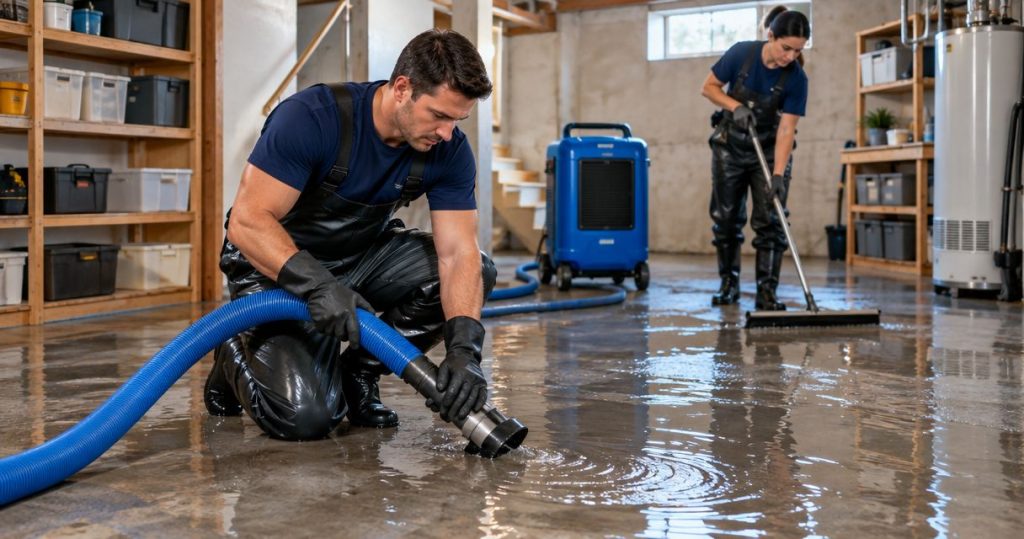
Best overall: a water-damage restoration contractor for extraction and drying. Best for sewage: a contaminated-water cleanup specialist. Best for cleanout and restoration scope assessment: Mission GDS. For homeowners comparing the best basement flood cleanup services Denver offers in 2026, this guide ranks service types by the problem they solve—not by unsupported company ratings. Mission GDS serves Front Range homeowners with restoration, junk removal, and related home services.
- The best basement flood cleanup services Denver homeowners choose address the water source, contamination, and drying needs.
- Choose a water-damage restoration contractor for standing water and wet building materials.
- Choose a contaminated-water cleanup specialist when sewage enters your basement.
- Mission GDS is best for Front Range homeowners seeking cleanout and restoration scope assessment.
- Fix the water source before treating cleanup as complete.
Why this matters
A flooded basement needs more than an empty floor. Water can reach wall cavities, insulation, carpet padding, and stored belongings. Removing what you can see does not establish that the building materials are dry.
The EPA's homeowner mold guidance recommends drying water-damaged areas and items within 24–48 hours to help prevent mold growth. That makes prompt assessment important, but speed does not replace electrical safety or contamination controls.
For your 2026 cleanup decision, separate three jobs: stop the source, address water damage, and remove damaged belongings. One contractor's scope does not automatically cover all three.
What makes the best basement flood cleanup service?
Use these criteria before choosing a company. A useful recommendation matches the contractor's work to your basement's condition.
- Water-source assessment: The proposed work identifies whether the water came from plumbing, a drain backup, groundwater, or exterior flooding.
- Contamination handling: The contractor explains how the water source changes handling, disposal, and cleaning requirements.
- Drying verification: The scope includes checking affected materials, not simply removing standing water or running fans.
- Material decisions: The contractor explains which items need removal and which are candidates for cleaning and drying.
- Clear handoffs: You know who handles plumbing, cleanup, debris removal, and repairs when separate trades are necessary.
- Written scope: The proposal identifies the work, exclusions, and completion checks. An on-site assessment comes before a meaningful quote.
Ask each contractor to describe the work in plain language. Equipment names alone do not tell you whether the basement's walls, floor assemblies, or contents have been assessed.
Basement flood cleanup options at a glance
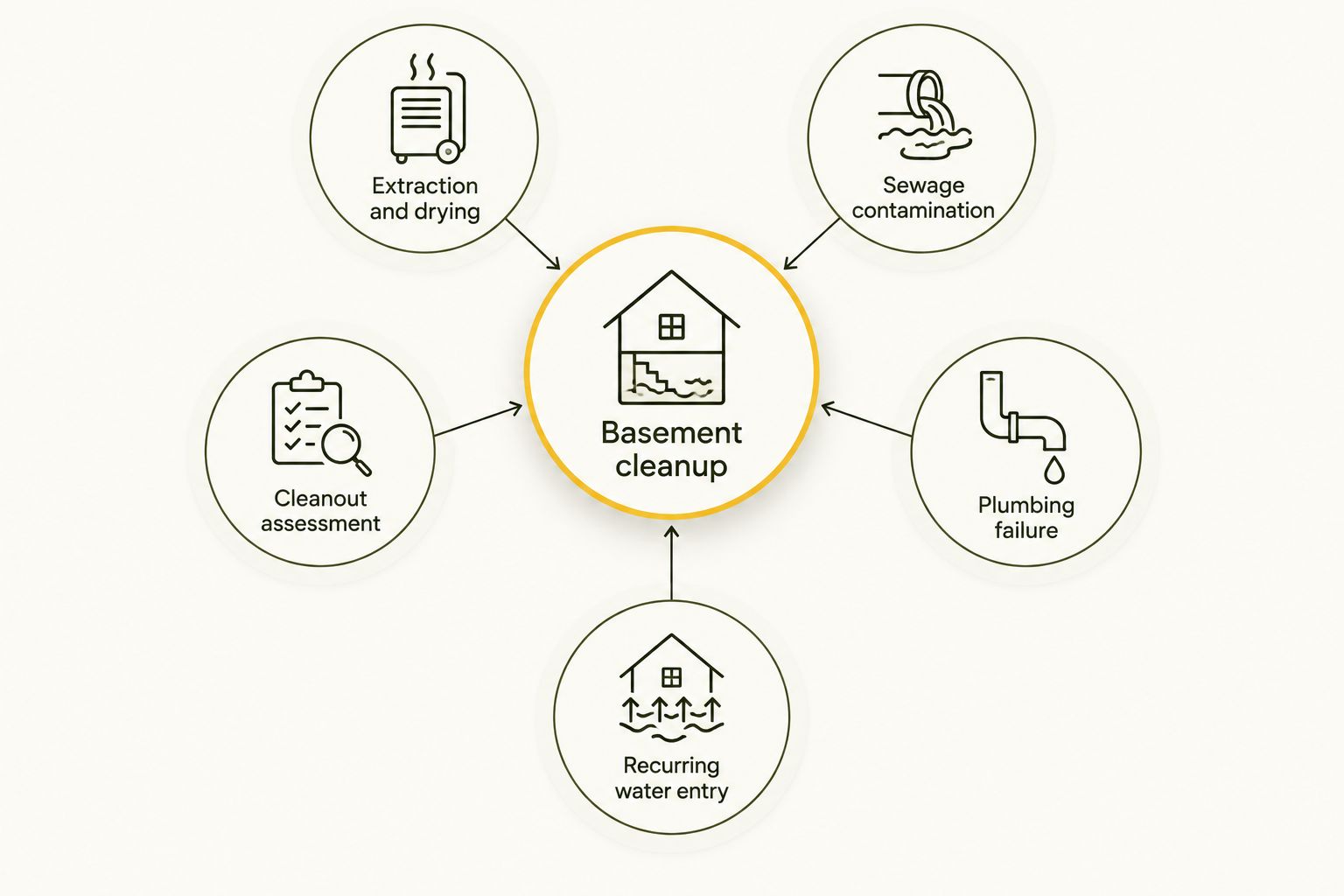
These 2026 recommendations are a decision tree. The first option handles the broadest water-damage problem; the remaining options address distinct conditions or stages.
| Ranked service | Best for | Standout role | Key limitation |
|---|---|---|---|
| Water-damage restoration contractor | Extraction and drying | Assesses wet materials and manages drying | Source repairs require the appropriate trade |
| Contaminated-water cleanup specialist | Sewage contamination | Handles cleanup around contaminated water | Does not replace sewer or plumbing repair |
| Mission GDS | Cleanout assessment | Offers restoration and junk removal | Confirm the specific flood-related scope on site |
| Licensed plumber | Plumbing failure | Repairs leaking pipes or drain problems | Plumbing repair alone does not dry the basement |
| Drainage or waterproofing contractor | Recurring water entry | Addresses how exterior water reaches the basement | Prevention work does not replace immediate cleanup |
The distinction matters: a plumber can stop a leak while wet drywall remains behind. A cleanout can remove ruined furniture while moisture remains beneath flooring. Choose the service that addresses the unresolved problem.
1. Water-damage restoration contractor: best for extraction and drying
A water-damage restoration contractor is the default starting point when standing water or wet building materials are the main problem. Look for a scope covering extraction, material assessment, drying, and verification before repairs close the affected areas.
Do not assume every company includes every stage. Ask whether wall cavities, flooring layers, and insulation need inspection, and who documents the condition before rebuilding.
Water-damage restoration contractor pros:
- Can coordinate water removal with assessment of affected materials.
- Connects drying decisions to the condition of the building, not just the floor surface.
- Gives you a defined cleanup scope before cosmetic repairs begin.
Water-damage restoration contractor cons:
- Plumbing or exterior drainage repairs need a separate scope.
- A general water-damage service is not automatically the right choice for sewage contamination.
- Finishing repairs and replacement of belongings require explicit inclusion.
Best for: A basement with standing water, soaked flooring, or wet walls after the area is safe to assess.
For 2026, make drying verification your deciding question: How will you determine that the affected materials are ready for repair? A completion decision should rest on assessment, not appearance.
Verdict: Buy the extraction-and-drying scope when wet materials are the primary problem.
2. Contaminated-water cleanup specialist: best for sewage contamination
Choose a contaminated-water cleanup specialist when sewage backs up into the basement. Floodwater also requires contamination assessment; clear-looking water is not proof that handling it is safe.
CDC flood guidance warns that floodwater can contain sewage and other hazards. Keep children and pets away, avoid contact, and explain the source to the contractor before work begins.
Contaminated-water cleanup specialist pros:
- Addresses contamination as part of the cleanup rather than treating it as ordinary water.
- Can specify handling and disposal requirements for affected porous materials.
- Separates cleaning decisions from the repair of the sewer or drain problem.
Contaminated-water cleanup specialist cons:
- Sewer repair and drain diagnosis remain separate tasks unless included.
- Cleaning does not guarantee that every affected furnishing is salvageable.
- Rebuilding belongs in a separate, clearly defined scope.
Best for: Sewage backups or water whose source raises contamination concerns.
Ask what can remain, what must be removed, and how workers will keep the affected area separate from occupied rooms. Do not hire a debris-removal service as a substitute for contamination assessment.
Verdict: Buy specialist cleanup for sewage; skip ordinary cleanout as the first response.
3. Mission GDS: best for cleanout and restoration scope assessment
Mission GDS provides restoration, junk removal, and related home services for Front Range and Denver metro homeowners. For basement flood cleanup, an on-site assessment is the right way to determine which of those services fits the job.
Mission GDS is best for Front Range homeowners seeking cleanout and restoration scope assessment. Confirm the work needed before booking debris removal, repairs, or another service as a complete flood response.
Mission GDS pros:
- Offers both junk removal and restoration services.
- Serves homeowners across the Front Range and Denver metro area.
- Allows customers to book online anytime.
Mission GDS cons:
- The specific flood-related work needs confirmation on site.
- Sewage handling, structural drying, and source repairs require explicit scope confirmation rather than assumptions.
- Removing damaged belongings alone does not establish that the basement is dry.
Best for: Homeowners arranging cleanout and restoration work after immediate hazards have been addressed.
Quote on site after the team sees the condition and scope. Keep debris removal and moisture-related work distinct in the proposal so you know what completion means.
Verdict: Hold the cleanup decision until the on-site assessment confirms the right scope.
4. Licensed plumber: best for a plumbing failure
A licensed plumber is the right trade when a leaking supply pipe, failed plumbing connection, or drain problem is causing the flooding. Fixing the source prevents cleanup from becoming a repeated cycle.
Tell the plumber where the water appeared and what fixtures were operating. Report what you observed without deciding that a floor drain, appliance, or pipe is responsible before inspection.
Licensed plumber pros:
- Addresses plumbing failures rather than only their visible aftermath.
- Can diagnose the drain or pipe problem behind recurring water.
- Establishes the source-repair work needed before normal use resumes.
Licensed plumber cons:
- Pipe or drain repair does not remove moisture from walls and flooring.
- Contaminated materials require an appropriate cleanup scope.
- Exterior water entry needs a different assessment if plumbing is not the source.
Best for: A basement flood associated with a leaking pipe, plumbing fixture, or drain malfunction.
Ask the plumber to explain the cause and completed repair in writing. Then use that information to brief the cleanup contractor so the teams are working from the same facts.
Verdict: Buy the source repair; do not treat plumbing work as finished flood cleanup.
5. Drainage or waterproofing contractor: best for recurring water entry
A drainage or waterproofing contractor belongs in the plan when water repeatedly enters through the foundation area or around basement openings. The assessment should consider how exterior water reaches the house before selecting a repair.
For a Front Range home in 2026, distinguish a recurring entry problem from a single plumbing incident. Note where water first appeared and whether it coincided with rain, snowmelt, or fixture use.
Drainage or waterproofing contractor pros:
- Focuses on the route water takes into the basement.
- Helps separate exterior drainage problems from plumbing failures.
- Addresses prevention instead of repeating debris removal after each event.
Drainage or waterproofing contractor cons:
- Immediate extraction and contaminated-water cleanup remain separate needs.
- Interior appearance alone does not identify the entry route.
- A proposed system needs an explanation tied to the property's actual conditions.
Best for: Repeated basement water entry linked to exterior conditions rather than an active plumbing leak.
Ask the contractor to show where water enters, explain the proposed correction, and identify what the work does not address. A named waterproofing method is not a diagnosis.
Verdict: Buy prevention work after the entry route is established; skip a system-first sales pitch.
How these services are ranked
The ranking follows the criteria above: water source, contamination, drying, material decisions, and clear scope. It ranks service fit, not individual companies' response times, customer reviews, or technical performance.
Extraction and drying come first because they address active water damage. Sewage changes the cleanup requirements. Cleanout, plumbing repair, and water-entry prevention then occupy separate roles rather than competing for the same job.
Which basement flood cleanup service should you choose?
Choose a water-damage restoration contractor by default when standing water and wet materials are the main problem. Choose contaminated-water cleanup first when sewage is involved. Add a plumber or drainage specialist when the water source still needs correction.
Before you book, complete this safe handoff checklist:
- Keep clear: Do not enter standing water where electrical hazards are possible.
- Record damage: Photograph affected areas from a safe position and record the water source if known.
- Confirm scope: Ask who handles extraction, contamination, drying, belongings, and repairs.
- Check completion: Agree on what must be assessed before the basement is put back together.
If you use a portable generator during a power outage, CDC guidance calls for keeping it outdoors, at least 20 feet from doors, windows, and vents. Never run it in a garage or basement.
The EPA's 24-hour to 48-hour drying guidance is a reason to act promptly, not permission to enter an unsafe basement. Electrical safety and contamination controls come first.
Book an on-site assessment
Confirm the cleanout or restoration scope before work starts. Quote on site after the condition is assessed.
FAQ
What’s the best basement flood cleanup service in Denver?
A water-damage restoration contractor is the default choice for standing water and wet building materials. Choose a contaminated-water cleanup specialist when sewage is involved, and arrange source repairs separately when needed.
Does Mission GDS offer services relevant to basement cleanup?
Mission GDS offers restoration and junk removal for Front Range and Denver metro homeowners. An on-site assessment determines the specific work that fits your basement and which tasks need a separate specialist.
Should I call a plumber or a flood cleanup company first?
Call a plumber for an active plumbing failure and arrange appropriate water-damage cleanup for the affected basement. Source repair and drying are different jobs; both need attention when a leak has soaked building materials.
Can I use a junk removal service after a sewage backup?
Junk removal is not a substitute for contaminated-water cleanup after a sewage backup. Have a qualified cleanup specialist establish safe handling and disposal requirements before arranging removal.
How quickly should a flooded basement be dried?
EPA guidance recommends drying water-damaged areas and items within 24–48 hours to help prevent mold growth. Do not enter unsafe water or start equipment around electrical hazards to meet that window.
Is my basement dry once the standing water is gone?
No, removing standing water does not establish that building materials are dry. Flooring layers, insulation, and wall cavities need assessment before repairs conceal them.
What should a basement flood cleanup quote include?
A cleanup quote should identify the affected areas, proposed work, exclusions, and completion checks. Ask who handles water removal, drying, contaminated materials, debris, source repairs, and rebuilding.
One last thing
Before damaged belongings leave the basement, photograph them and check your insurer's documentation requirements. Do not keep contaminated items inside simply to preserve evidence; coordinate documentation with safe removal.
For your 2026 cleanup plan, the strongest final check is not whether the floor looks clean. It is whether the source, affected materials, and remaining repair work have all been addressed.
Book online anytime at missiongds.com, or call/text (970) 788-2884. Mission accepted.
Related guides
- Garage door battery backups for Colorado power outages
- Smart garage door openers for Denver homeowners
- Garage door openers for Colorado homes