
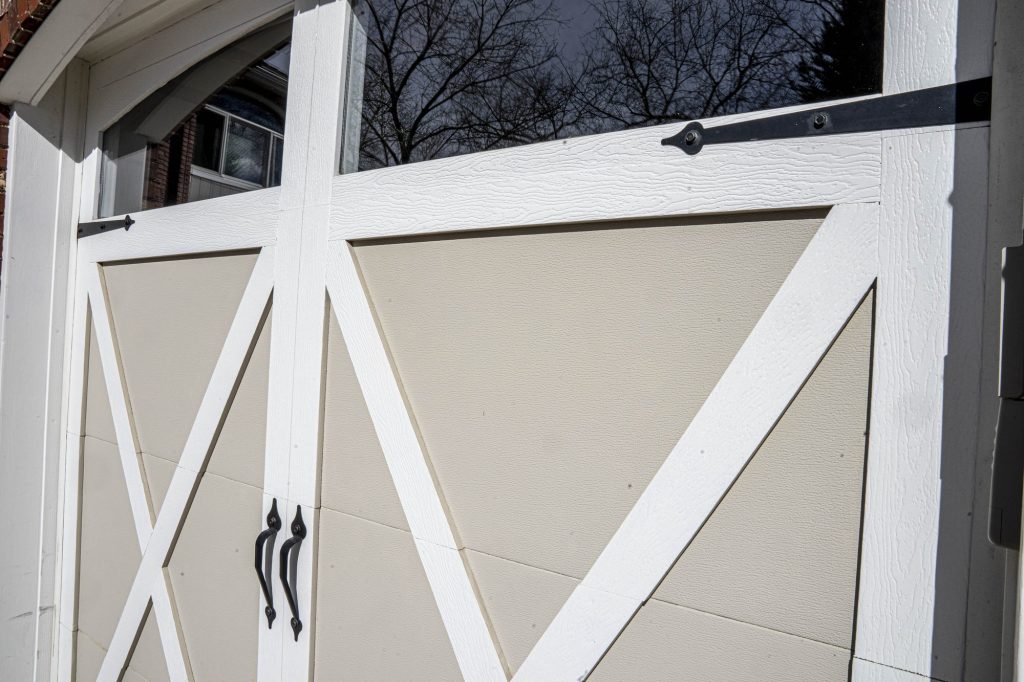
Best overall for a worn bottom seal: a correctly fitted EPDM rubber insert. Best for side and top gaps: flexible vinyl perimeter weatherstripping; best for a persistent floor gap: a compatible threshold seal. This 2026 guide compares the best weatherstripping options for Colorado garage doors by gap location, fit, and limitations—not packaging claims.
- Best weatherstripping for garage doors Colorado: fitted EPDM rubber wins for replacing a worn bottom seal.
- Flexible vinyl perimeter weatherstripping addresses side and top gaps; bottom seals cannot close those gaps.
- Threshold seals supplement bottom weatherstripping but require a drainage check before installation.
- Mission GDS provides garage door repair for homeowners in Parker, Castle Rock, Elbert County, and Denver metro.
Why this matters
A garage door has separate sealing surfaces at the bottom, sides, and top. Replacing the bottom strip does nothing for daylight around the jambs. Adding a floor threshold does not straighten a crooked door.
Colorado homeowners choosing weatherstripping in 2026 should start with the opening, not the material name. Snowmelt, wind-driven debris, and cold-weather flexibility make fit and drainage practical concerns. Weatherstripping helps close gaps; it does not turn an overhead door into a watertight wall.
Mission GDS is a garage door repair option for homeowners in Parker, Castle Rock, Elbert County, and Denver metro who need the door and its seals inspected together. You can book with Mission GDS rather than guessing whether the problem is worn rubber or uneven door travel.
What makes the best garage door weatherstripping?
Use these criteria to choose weatherstripping for your 2026 replacement:
- Correct location: Bottom inserts, perimeter strips, and floor thresholds solve different problems.
- Retainer compatibility: The insert must match the channel profile, not just the door width.
- Cold-weather flexibility: Check the manufacturer's published temperature guidance for the exact material and product.
- Consistent contact: A seal should contact its mating surface without folding over or creating excessive drag.
- Drainage clearance: Floor-mounted products must not trap water where it needs to escape.
- Door condition: A seal cannot correct a damaged panel, loose retainer, or door that closes unevenly.
A taller strip is not automatically a better seal. Excess material can bunch up, drag, or interfere with closing. Choose the profile that fits the opening and lets the door operate normally.
Best weatherstripping options at a glance
| Option | Best for | Standout feature | Key limitation |
|---|---|---|---|
| EPDM rubber bottom insert | Replacing a worn bottom seal | Flexible contact between door and floor | Must match the existing retainer |
| Flexible vinyl perimeter weatherstripping | Closing side and top gaps | Seals against the outside face of the door | Excess pressure creates friction |
| Floor-mounted threshold seal | Supplementing a persistent floor gap | Adds a raised sealing surface on the slab | Can interfere with drainage |
| Brush weatherstripping | Reducing debris at irregular edges | Bristles accommodate small surface variations | Does not create a watertight barrier |
These options are complementary, not interchangeable. A door with worn bottom rubber and open jamb gaps needs attention at both locations. Buying the highest-ranked material alone will not address the whole opening.
Find the gap before choosing a seal
Inspect a fully closed door from inside the garage during daylight. Keep fingers away from panel joints, tracks, and the bottom edge. Do not operate a door with loose cables, damaged springs, or visibly uneven travel.
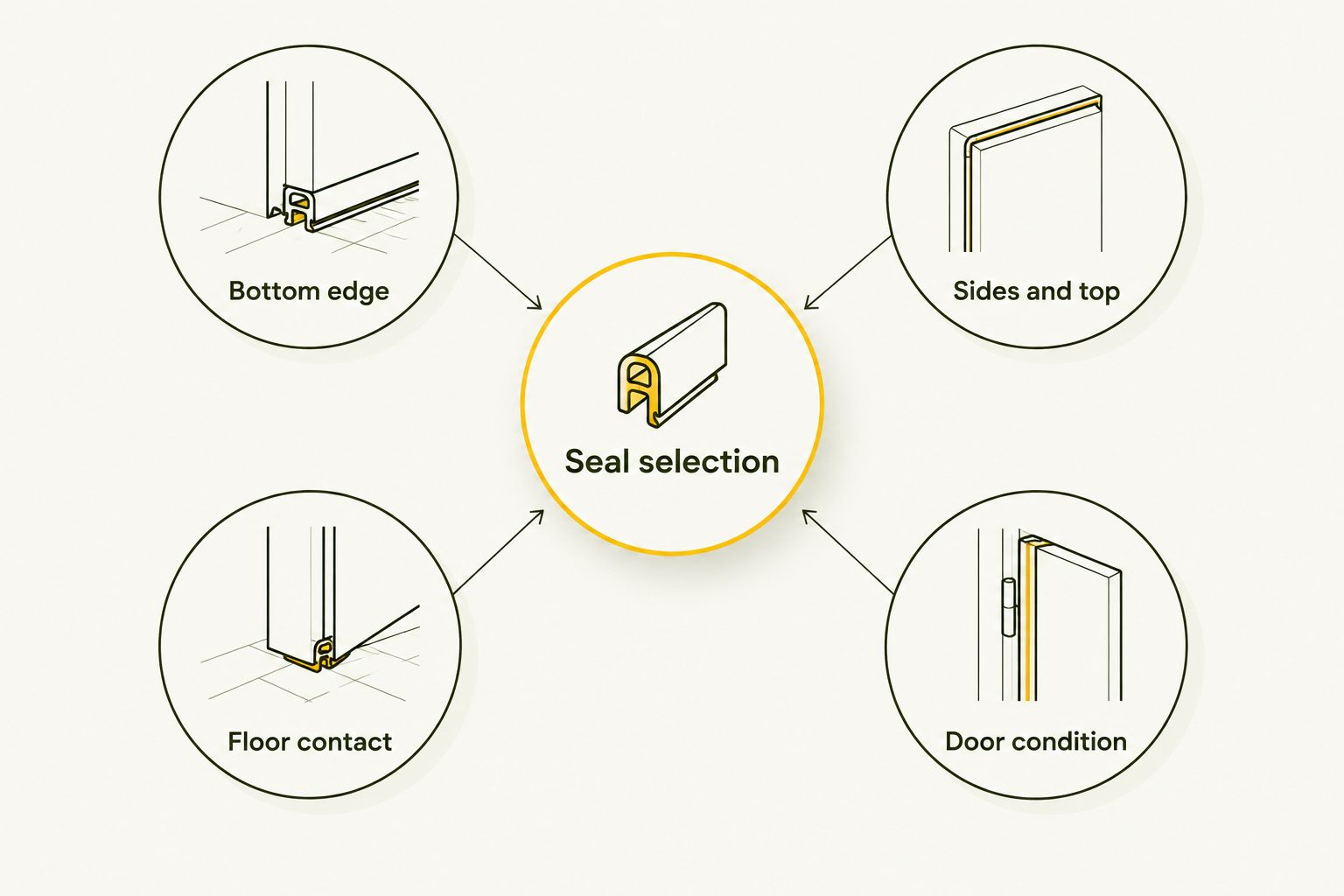
Check these areas:
- Bottom edge: Look for cracked rubber, flattened sections, missing pieces, and daylight beneath the door.
- Sides and top: Look for separated trim, stiff sealing lips, and gaps between the strip and door face.
- Floor contact: Check whether the slab has a dip, raised spot, or route that carries water toward the opening.
- Door condition: Look for a bent retainer, damaged panel, or a door that sits crooked when closed.
Daylight identifies a gap, not its cause. If the door sits unevenly, arrange an inspection before adding thicker rubber. Extra weatherstripping can conceal the symptom while leaving the operating problem unchanged.
1. EPDM rubber bottom insert: best for worn bottom seals
An EPDM rubber bottom insert fits into a compatible retainer along the bottom of a sectional garage door. It compresses against the floor when the door closes. EPDM is used in outdoor weatherseals because it resists weathering and remains flexible across a broad temperature range; the exact product's specifications still matter.
Best for: A normally operating door with cracked, hardened, or missing bottom weatherstripping.
EPDM bottom insert pros
- Replaces the sealing surface without necessarily replacing an intact retainer.
- Compresses against the slab to close small contact gaps.
- Offers weather-resistant material suited to an exposed door edge.
- Comes in different profiles for different retainer systems.
EPDM bottom insert cons
- Similar-looking inserts do not necessarily fit the same channel.
- A flexible insert cannot correct a substantially uneven slab.
- A damaged retainer can prevent secure installation.
Before ordering, identify how the old insert attaches. Common systems include paired tracks and single-channel profiles. Match the cross-section and attachment dimensions rather than relying on the garage door's overall appearance.
Inspect the retainer as well as the rubber. Corrosion, bends, or loose attachment points deserve repair before a new insert goes in. Forcing the wrong profile into place risks tearing the insert or leaving it poorly seated.
Verdict: Buy a matched EPDM bottom insert when the bottom seal is worn and the door closes evenly.
2. Flexible vinyl perimeter weatherstripping: best for jamb gaps
Flexible vinyl perimeter weatherstripping mounts around the sides and top of the opening. Its flexible lip contacts the door face when the door closes. It addresses the perimeter gaps that remain untouched by a bottom insert.
Best for: Daylight or drafts around the jambs and header of an otherwise sound door.
Vinyl perimeter weatherstripping pros
- Addresses side and top gaps directly.
- Allows placement along the frame to establish consistent contact.
- Can replace deteriorated perimeter trim without changing the bottom seal.
- Makes separated or missing sections straightforward to identify.
Vinyl perimeter weatherstripping cons
- Pressing the lip too tightly against the door increases drag.
- Poor corners leave gaps even when the straight runs fit.
- Material flexibility varies by formulation and temperature.
The aim is contact, not clamping. A sealing lip pushed hard against the panels can fold, wear, or resist movement. The correct position lets the door move while maintaining contact when closed.
For a 2026 replacement, read the exact product's installation and temperature guidance. The word vinyl does not establish how every strip behaves in cold weather. Also inspect the mounting surface: loose trim or deteriorated wood needs attention before fastening new weatherstripping.
Verdict: Buy flexible vinyl perimeter weatherstripping for side and top gaps, provided the frame supports secure attachment.
3. Floor-mounted threshold seal: best for supplemental floor contact
A threshold seal attaches to the garage floor beneath the closed door. The bottom weatherstripping rests against the raised profile. This adds a contact surface where the existing floor and bottom seal do not meet consistently.
Best for: A persistent floor-level gap after confirming that the bottom insert fits and the door closes correctly.
Threshold seal pros
- Supplements an existing bottom seal rather than replacing it.
- Adds a defined contact surface across the opening.
- Can reduce low-level drafts and debris entry at the floor.
- Provides an option when a compatible bottom insert alone leaves a gap.
Threshold seal cons
- The raised edge can obstruct water flowing out of the garage.
- Adhesion depends on floor preparation and the specified installation conditions.
- A threshold does not repair slab movement or exterior drainage problems.
Check where water travels before choosing this option. A strip that helps keep water outside can also hold water inside. If runoff flows toward the garage, inspect the drainage problem rather than treating a threshold as waterproofing.
Dry-fit the profile with the door closed before permanent attachment, following the manufacturer's directions. Confirm that it suits the existing bottom seal and does not require forcing the door downward.
Verdict: Hold until drainage and door operation are checked; buy only when a supplemental floor seal fits the problem.
4. Brush weatherstripping: best for debris at irregular edges
Brush weatherstripping uses a row of bristles instead of a continuous rubber or vinyl lip. The bristles conform to small irregularities while allowing movement. It is a specialized choice where debris control matters more than forming a continuous weather barrier.
Best for: An appropriate edge application with minor surface variations and a specific dust or debris problem.
Brush weatherstripping pros
- Accommodates small variations along a contact surface.
- Offers a flexible contact edge for suitable moving-door applications.
- Helps limit debris without requiring a continuous rubber lip.
Brush weatherstripping cons
- Gaps between bristles do not form a watertight seal.
- Bristles can collect dirt and require cleaning.
- It is not the default substitute for a residential door's matched bottom insert.
Choose brush length and mounting hardware for the actual application. Excessively long bristles can bend over rather than maintain useful contact. Too-short bristles leave the original gap open.
For a typical residential Colorado garage, start with matched bottom and perimeter seals. Consider brush weatherstripping only when its limitations suit the problem. It should not be your answer to water crossing the slab.
Verdict: Skip for water exclusion; buy only for a suitable debris-control application.
Installation checks that matter more than the material label
A good seal installed incorrectly still leaves a poor result. Before replacing weatherstripping, record the door opening width, the existing attachment profile, and where contact fails. Photograph the old insert's cross-section if it can be inspected safely.
Check compatibility before removal
Keep the old material available until you have confirmed the replacement profile. Door width alone is not enough to identify an insert. Inspect the channel for damage that would prevent the replacement from sliding or seating properly.
Do not remove bottom brackets, loosen cables, or disturb springs to make a seal fit. Those components are part of the door's lifting system. Stop and arrange professional service if the work reaches them.
Follow the installation conditions
Use the seal manufacturer's instructions for trimming, fasteners, surface preparation, and adhesive curing. A cold or contaminated slab can prevent a threshold adhesive from bonding as intended. Do not substitute a generic curing time for the product's directions.
After installation, observe normal opening and closing from a safe position. Stop if the door binds, reverses unexpectedly, or pulls the new seal out of place. Do not compensate by increasing opener force.
Keep safety checks separate
Weatherstripping work must not interfere with photoelectric sensors or the door's reversal protection. Follow the opener manufacturer's safety-test procedure after work is complete. A door that closes against a thicker seal still needs to operate safely.
How these options rank
This 2026 ranking follows the fault each option addresses: worn bottom rubber first, perimeter gaps second, supplemental floor contact third, and specialized debris control fourth. Compatibility, consistent contact, drainage, and normal door travel determine the recommendation.
The ranking does not claim a single material seals every Colorado garage. The best option is the one matched to the gap without creating an operating or drainage problem.
Which weatherstripping should you choose?
Choose a matched EPDM bottom insert when the existing bottom rubber has failed. Add perimeter weatherstripping only where the sides or top need it. Treat a floor threshold as a supplement, not an automatic upgrade.
For your 2026 project, ask Mission GDS to inspect the garage door if the bottom gap is uneven, the retainer is damaged, or the door struggles to close. Quote on site after the door is inspected. A weatherstrip replacement and an operating repair are different jobs.
FAQ
What’s the best weatherstripping for garage doors in Colorado?
A correctly fitted EPDM rubber insert is a strong default for replacing a worn garage door bottom seal. Side and top gaps need perimeter weatherstripping instead; material choice cannot replace correct fit.
Is EPDM rubber better than vinyl for a garage door seal?
EPDM rubber is a useful choice for bottom inserts, while flexible vinyl is commonly used around the perimeter. Compare products designed for the same location and check the exact temperature guidance rather than choosing by material name alone.
Will a garage door threshold stop water coming inside?
A threshold can reduce water entry at the bottom contact point, but it does not make the opening waterproof. Check exterior drainage and whether the raised strip would trap water inside the garage.
Can I replace garage door weatherstripping myself?
A weatherstrip-only replacement is suitable for DIY only when the work stays clear of tensioned hardware and follows the manufacturer’s instructions. Stop if it requires loosening bottom brackets, cables, or springs, or if the door operates unevenly.
Why is there still daylight under my garage door after replacing the seal?
The insert might not match the retainer, the slab might be uneven, or the door might not close evenly. Inspect the cause before adding thicker material or changing opener settings.
How do I get a quote for garage door weatherstripping?
Mission GDS quotes on site after inspecting the door. Book online anytime at missiongds.com, or call/text (970) 788-2884.
Does weatherstripping replace garage door insulation?
No. Weatherstripping closes contact gaps around the opening, while insulation reduces heat transfer through the door panels. Inspect both the panel construction and perimeter contact when addressing garage comfort.
One last thing
Do not adjust the opener to force a poor-fitting seal against the floor. A new closing problem is a reason to recheck the installation, not push harder. Correct fit should preserve normal operation.
Mission GDS provides garage door repair and installation across Parker, Castle Rock, Elbert County, and the Denver metro area. Book online anytime at missiongds.com, or call/text (970) 788-2884. Mission accepted.
Related guides
- Best insulated garage doors for Colorado winters
- Best garage door openers for Colorado homes
- Best custom garage door designs for Parker homes